
Back to School September!

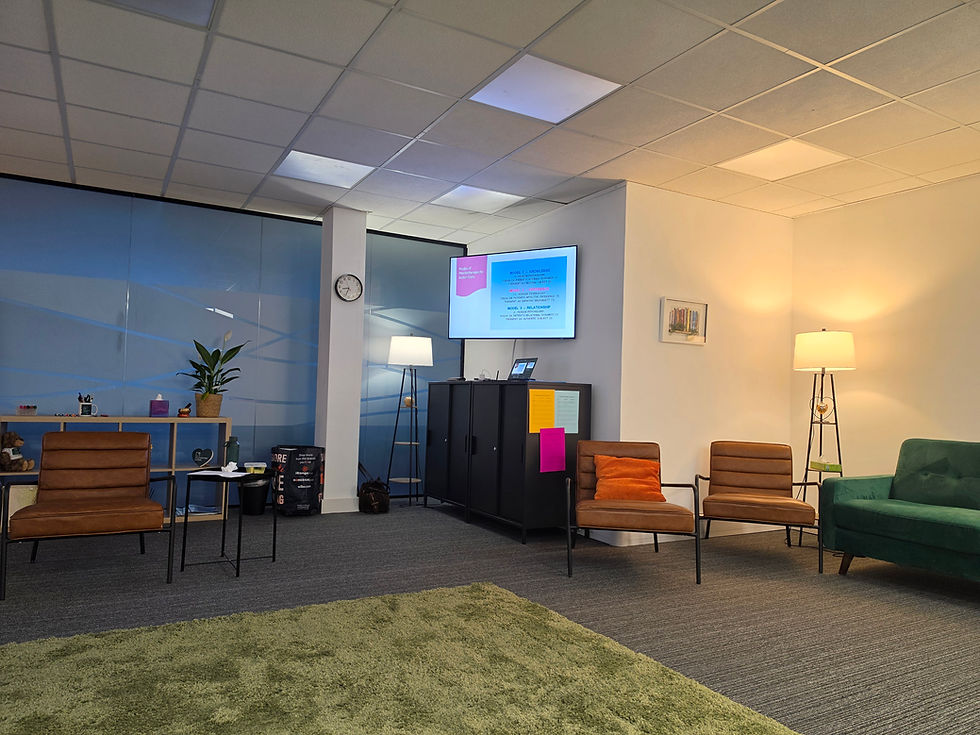
Back in the Room: What September Teaches Us About Starting Again
There is a particular quality to the training room in September. The carpet still holds the quiet of August, and then, over the course of a single weekend, it fills again — with bags, coats, laughter, nerves, and the low hum of people re-finding each other after a summer apart. Watching our trainees land back into the room this month has been, as it always is, a small case study in how differently we each return to learning.
Some walk in with a sharpened stylus and an open notebook, visibly hungry to get going — the summer has clarified something for them, and they arrive ready to write, to question, to get their hands back into the clinical material. Others arrive quieter, carrying a very understandable anxiety: what did I forget? Will I remember how to think like this? Where do I fit again? Between those two poles sits everything else — the trainee who has missed their tutor and their group more than they expected to, the one who is craving connection and contact after a summer of relative isolation, the one who feels a flicker of discomfort simply at being looked at again, in a room, by peers.
What we try to hold onto, as trainers, is that none of these responses are a problem to be corrected. They are all information. Excitement and anxiety, eagerness and reticence, comfort and discomfort — these are not opposing categories of "good" and "bad" adjustment. They are simply the many honest ways a nervous system and a mind register change, and in a training that asks people to work with exactly those registrations in others, it seems only right that we notice and welcome them in ourselves first. A trainee who names their anxiety about "getting it right" this year is often already doing some of the most important work of the term.
A Room That Has Changed, Too
It isn't only the trainees who have moved on over the summer — the room has too. There's a new maxi-rug underfoot, some new plants finding their feet by the window, and a new bookcase, freshly stocked with additions to the PI library. Small things, perhaps, but the reactions have been anything but small. Some trainees settled into the changes without a second glance; others clocked every difference the moment they walked through the door, remarking on what's new, what's moved, what feels unfamiliar. That range of response is, again, exactly the point. A room is never just a room. It's a container that people bring their history, expectations and sensitivities to — and noticing how differently a new rug or a new shelf of books can land in a group is itself a useful, live piece of clinical learning.
Writing the Year Before Living It
One of the practices we value most at the start of the training year is asking each trainee to set out, in their own words, a learning and personal change contract — what they want this year to give them, both professionally and personally. It's a modest exercise on paper, but it does something important: it asks people to arrive not just physically, but intentionally. Whether someone's contract speaks to deepening their theoretical understanding, building confidence in the consulting room, or simply staying more honestly in contact with their own process, putting it into words at the outset gives the year ahead a shape they chose themselves.
A New Rhythm for the Year
This year we've also staged our monthly modules by year group, so each cohort has its own dedicated weekend: Year 3 trainees join us on the first weekend of the month, Year 2 on the second, and Year 1 on the third. It's a structure designed to give each group its own rhythm and identity across the year, while still keeping the wider community of the Institute connected across the calendar.
Over to You
Returning to learning — whether after a summer, a career break, or simply a long stretch away from a classroom — rarely happens in one uncomplicated feeling. It's usually a blend: relief and nerves, curiosity and caution, the pull of the familiar tribe and the slight strangeness of a changed room.
How did you start back to learning after your own summer break? We'd love to hear what showed up for you — the excitement, the apprehension, or the bits of both.


Comments